Nexus:
ERP Bridge.
A bi-directional data synchronisation platform connecting Microsoft Business Central and HubSpot CRM. Nexus maps, transforms, and syncs contacts, companies, invoices, and products across both systems — handling up to 1 million records per sync cycle with full field-level mapping control.
Role
Solutions Architect
Stack
Node.js, TypeScript, React, Cloudflare Workers
Timeline
3 Weeks
Outcome
1M Records / Sync
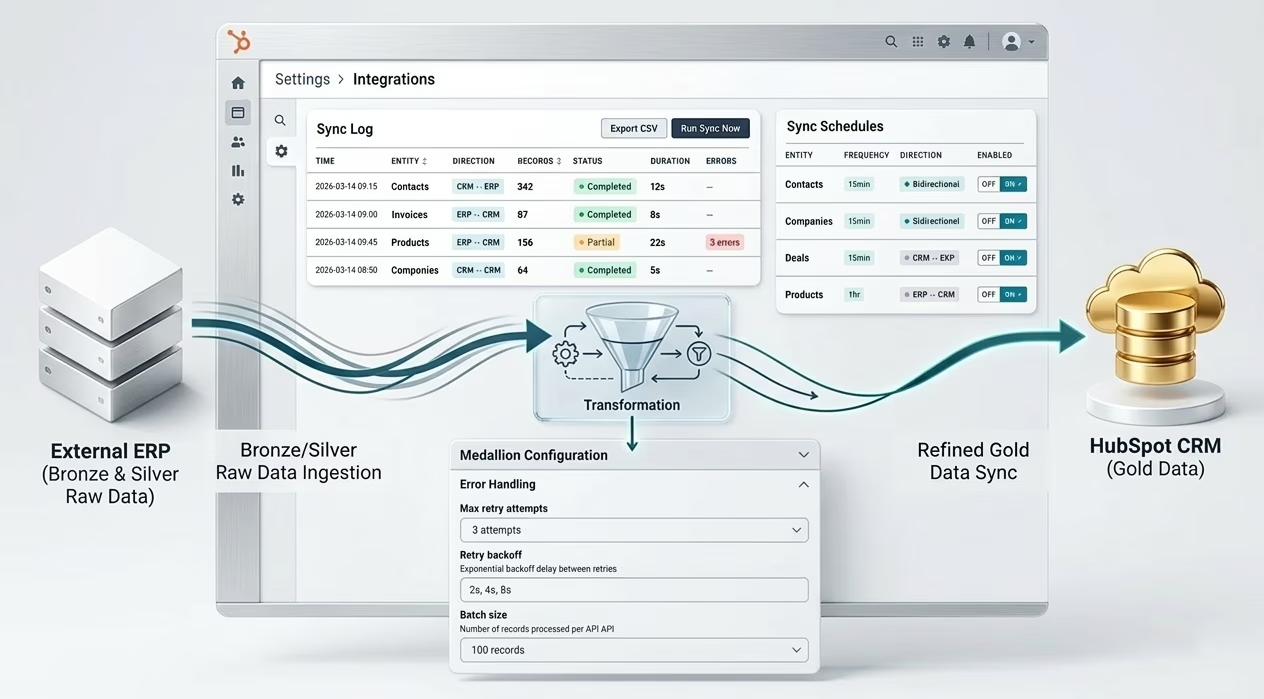
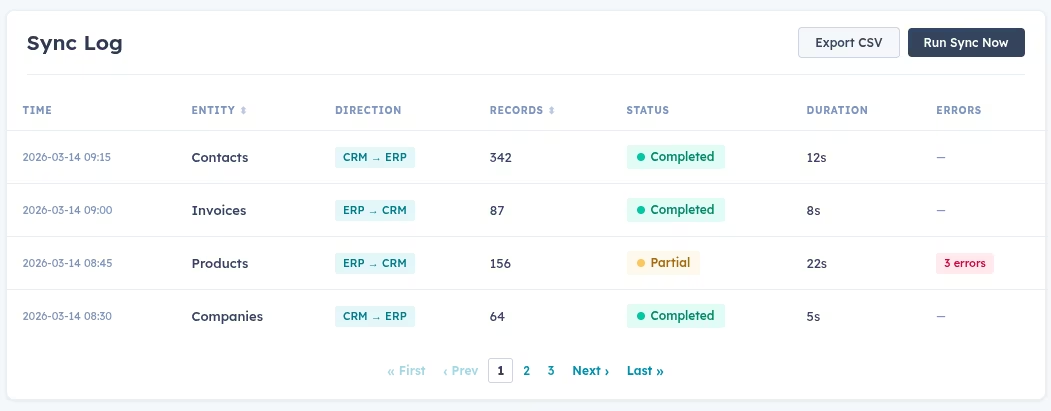
Fig 0.1 — Nexus Sync Log: real-time overview of entity synchronisation between Business Central and HubSpot.
01 // The Challenge
Two Systems,
Zero Sync.
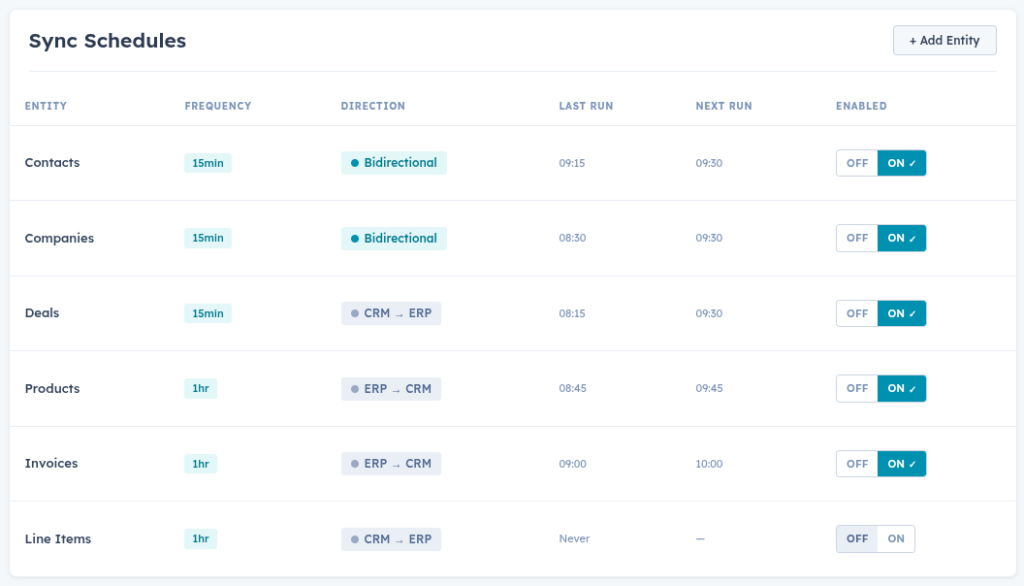
The client operated Microsoft Business Central as their ERP backbone and HubSpot as their CRM — but the two systems didn't talk to each other. Sales reps manually copied contacts, finance re-keyed invoice data, and product catalogues drifted out of alignment weekly. Every manual handoff introduced errors, delays, and lost revenue.
02 // The Architecture
Mapping Layer
by Design.
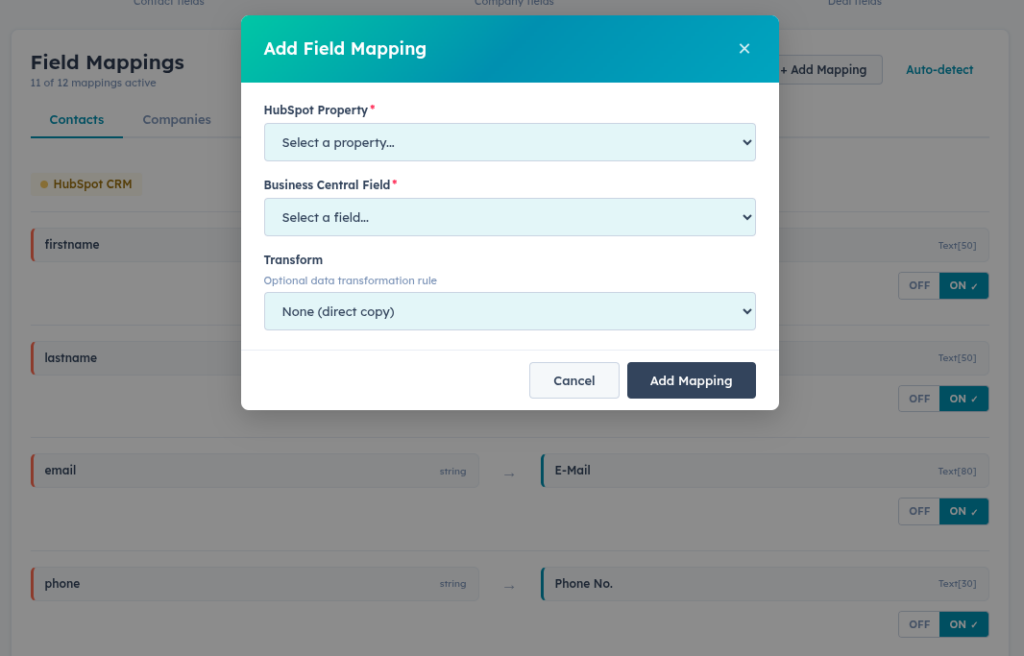
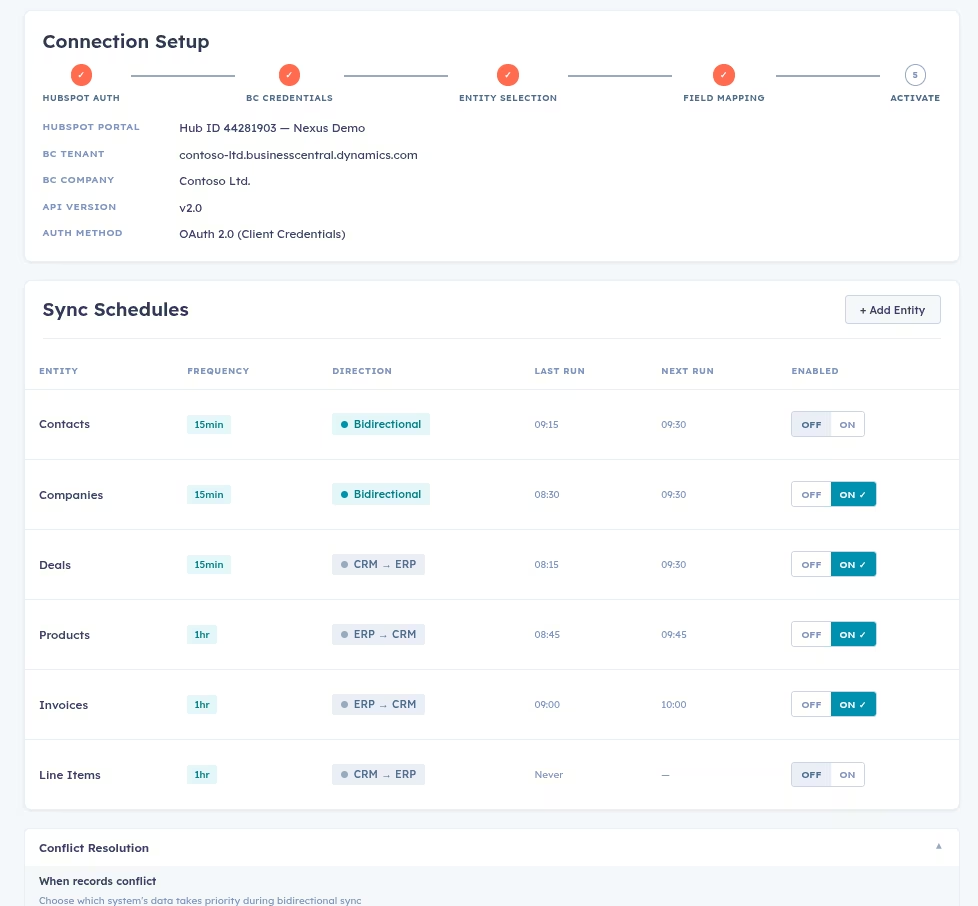
Nexus introduces a visual field-mapping interface that lets administrators define exactly how data flows between systems. Each entity type — Contacts, Companies, Invoices, Products — has its own mapping configuration where BC fields are paired with HubSpot properties, with optional transformation rules for data format conversion. The system supports direct copy, concatenation, date formatting, and custom transformation logic.
03 // The Engine
Built for
Scale.
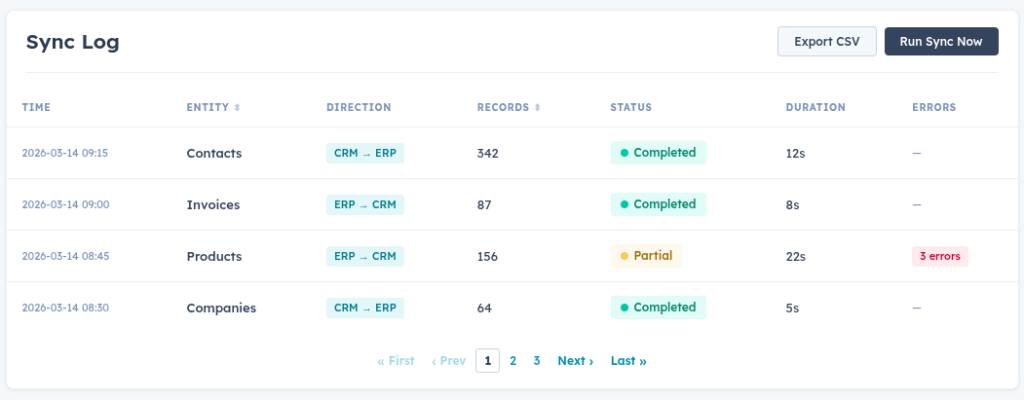
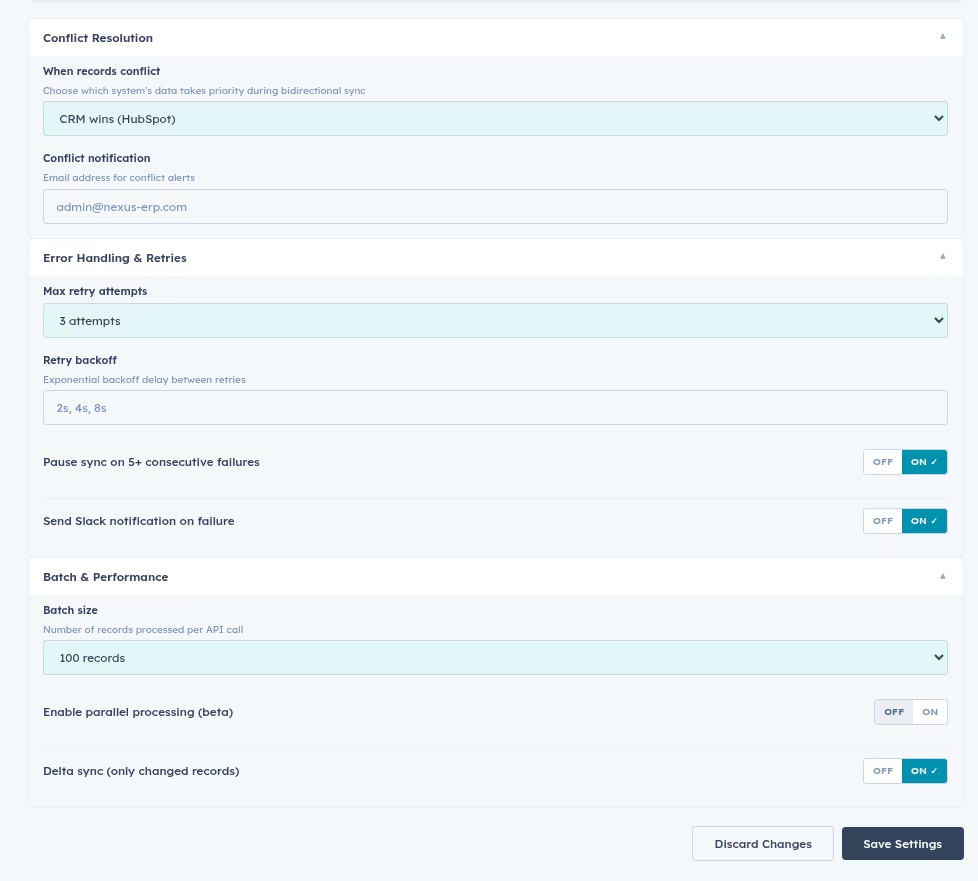
Under the hood, Nexus runs on Cloudflare Workers for edge-level performance and uses batched API calls with intelligent retry logic to handle up to one million records per sync. The Sync Log provides complete operational visibility: every run is timestamped, showing entity type, direction (CRM → ERP or ERP → CRM), record count, duration, and error details. Partial syncs surface granular error reports so operators can resolve issues without re-running entire batches.
04 // The Data Pipeline
Medallion
Architecture.
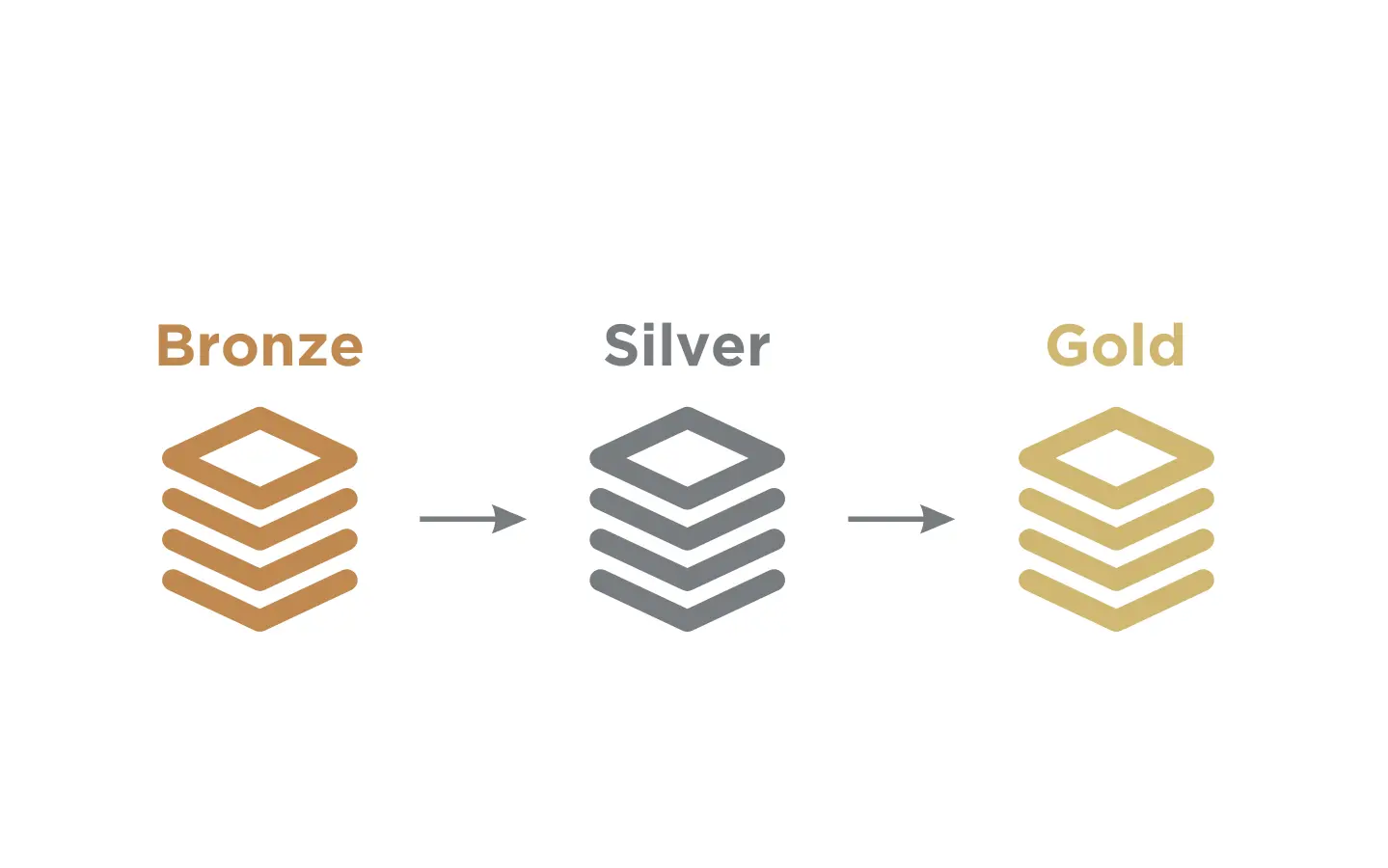
Nexus processes every sync through a three-layer Medallion architecture — Bronze, Silver, Gold — ensuring data integrity at each stage before it reaches the destination system.
- → Bronze Layer — Raw ingestion from source APIs. Records are captured exactly as they arrive from Business Central or HubSpot, with full payloads stored for audit and replay.
- → Silver Layer — Cleansing and normalisation. Field mapping rules are applied, data types are coerced, duplicates are detected, and transformation logic (concatenation, date formatting, custom functions) executes here.
- → Gold Layer — Business-ready records. Only validated, fully-transformed data is promoted to Gold and written to the destination system via batched API calls.
05 // The Orchestrator
Central Command
Pattern.
An orchestrator service sits at the heart of Nexus, coordinating every sync cycle end-to-end. Rather than scattering logic across isolated workers, the orchestrator owns the full lifecycle — deciding what to sync, in what order, and how to recover when things go wrong.
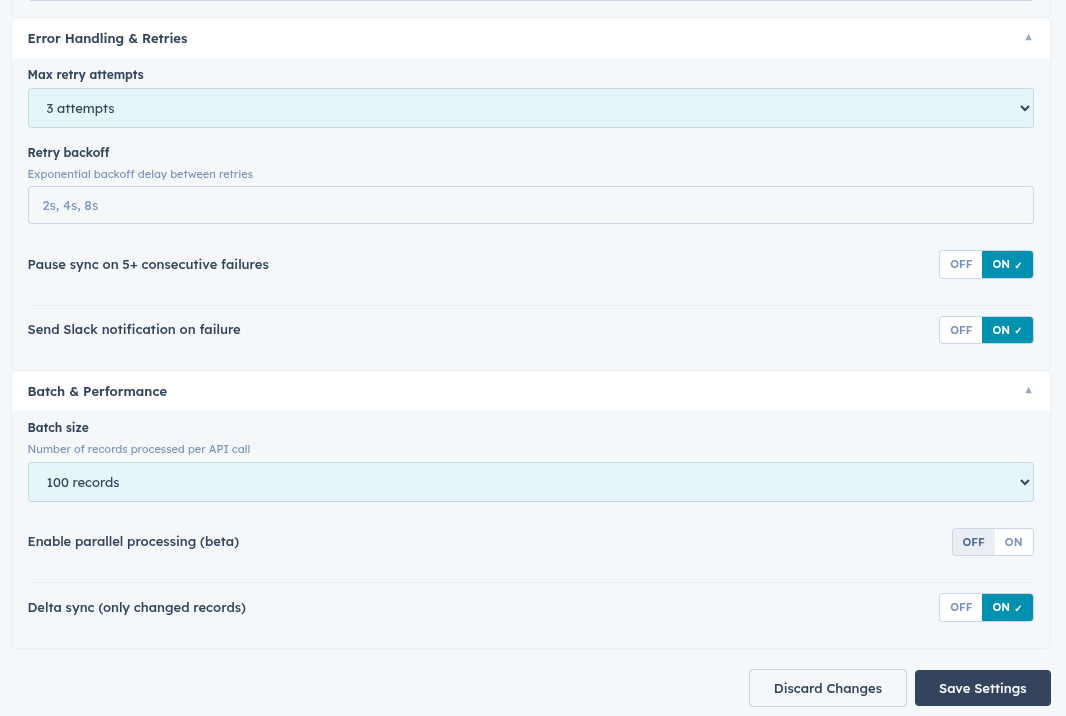
- → Scheduling and Triggers — The orchestrator manages both cron-based schedules and on-demand sync requests, ensuring only one sync per entity type runs at a time to prevent race conditions.
- → Pipeline Coordination — For each entity, it sequences the Bronze → Silver → Gold pipeline stages, passing context between layers and halting progression if a stage fails validation thresholds.
- → Error Recovery and Retry — Failed records are isolated, not discarded. The orchestrator tracks partial failures per batch, applies exponential backoff on API rate limits, and supports selective re-sync of only failed records.
- → Observability — Every decision the orchestrator makes is logged to the Sync Log: which records moved through each layer, what transformations were applied, and where errors occurred — giving operators full traceability.
06 // Product Gallery
The Connector
Interface.
The Impact.
Nexus eliminated the manual data bridge between Business Central and HubSpot — turning hours of weekly admin into a single automated sync cycle.